You do not enjoy a city for its seven or seventy-seven wonders, but for the answer it gives to a question of yours. (Italo Calvino) Perhaps we should start here—with a thought from a literary "giant"—to reflect on why the urban theme continues to fascinate painters and visual art enthusiasts alike. From Canaletto’s celebrated views of Venice to Impressionist Paris, from Kirchner’s Berlin to Sironi’s Milan, city streets have spoken to us through canvases, illustrating the life of those times while simultaneously revealing the certainties or fears, anxieties and hopes of the artists communicating their worldview. The city serves as a place of exploration where one can lose and rediscover oneself, unearthing answers to our questions amidst the straight or jagged lines of buildings and streetlamps. Daniele Cestari, an architect by training, has made cityscapes the foundation of his artistic inquiry, yet he strips away their specific recognizability: a city is a city, and a suburban street will always evoke our own lived experiences, regardless of whether the building is actually in Ferrara or New York. A domestic dimension of the urban landscape emerges in the work of Andrej Mussa, who loves to bring suburban vistas back to life—scenes where we can rediscover moments from our own past. Closer to an "Impressionist" sensibility, meanwhile, are the watercolors of Joseph Zbukvic; he delights in capturing the atmosphere of the places he visits, allowing us to admire glimpses of cities across the globe. When discussing cities, one cannot overlook New York—the quintessential metropolis and an essential subject of exploration. Some, like Neil Douglas, analyze its architectural aspects; others, like Christian Koivumaa, are drawn to the lights of the streets and cars stalled in traffic; while others still—such as Francesca Galliani, a true New Yorker—examine the symbols and values the city conveys. We invite you to view a selection of works on this theme, in the hope that you will find the answer to your question.
You do not enjoy a city for its seven or seventy-seven wonders, but for the answer it gives to a question of yours. (Italo Calvino)
Perhaps we should start here—with a thought from a literary “giant”—to reflect on why the urban theme continues to fascinate painters and visual art enthusiasts alike.
From Canaletto’s celebrated views of Venice to Impressionist Paris, from Kirchner’s Berlin to Sironi’s Milan, city streets have spoken to us through canvases, illustrating the life of those times while simultaneously revealing the certainties or fears, anxieties and hopes of the artists communicating their worldview.
The city serves as a place of exploration where one can lose and rediscover oneself, unearthing answers to our questions amidst the straight or jagged lines of buildings and streetlamps.
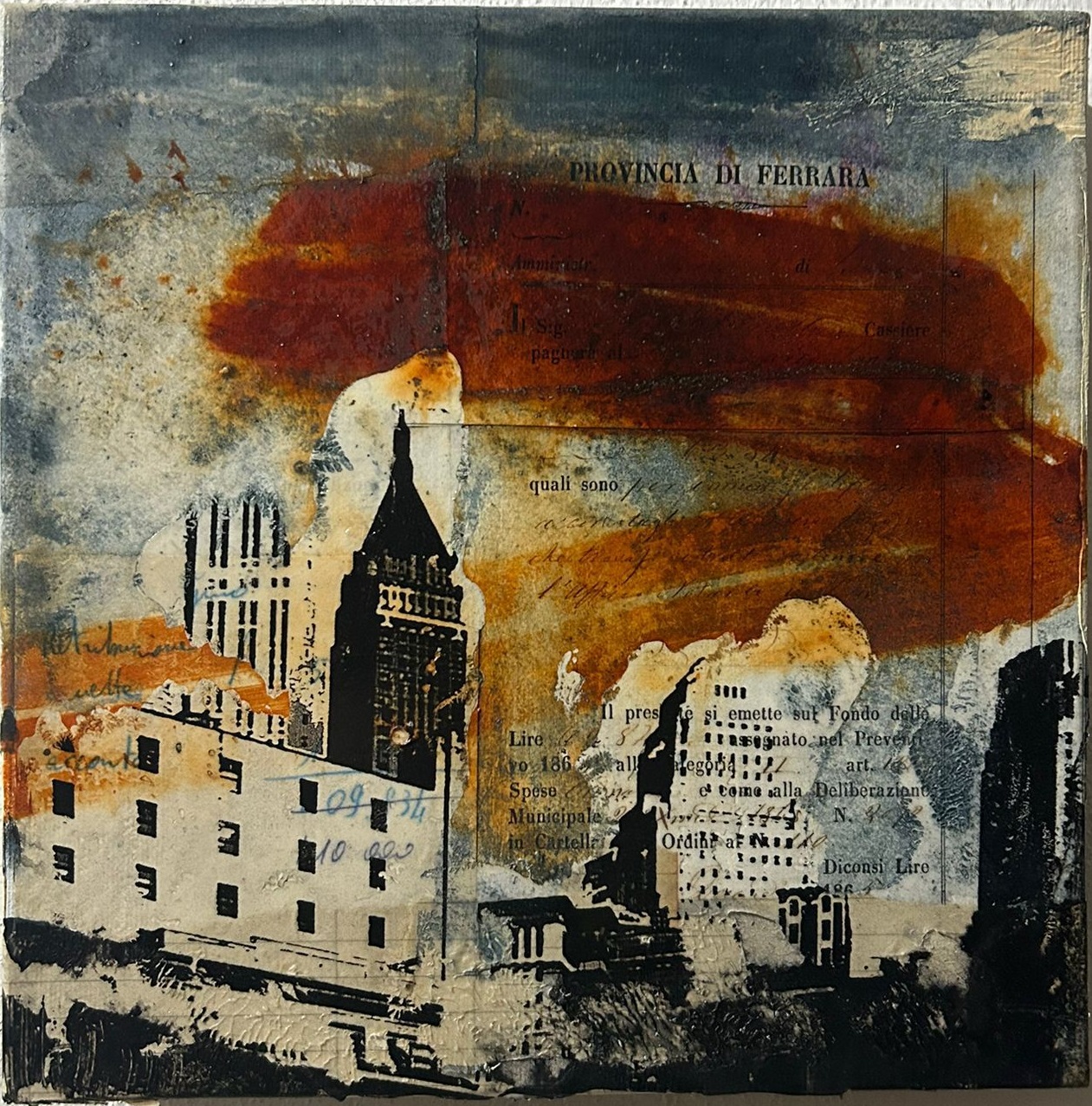
Daniele Cestari, an architect by training, has made cityscapes the foundation of his artistic inquiry, yet he strips away their specific recognizability: a city is a city, and a suburban street will always evoke our own lived experiences, regardless of whether the building is actually in Ferrara or New York.
A domestic dimension of the urban landscape emerges in the work of Andrej Mussa, who loves to bring suburban vistas back to life—scenes where we can rediscover moments from our own past.
Closer to an “Impressionist” sensibility, meanwhile, are the watercolors of Joseph Zbukvic; he delights in capturing the atmosphere of the places he visits, allowing us to admire glimpses of cities across the globe. When discussing cities, one cannot overlook New York—the quintessential metropolis and an essential subject for exploration. Artists approach it in various ways: some, like Neil Douglas, analyze its architectural aspects; others, like Christian Koivumaa, are drawn to the lights of the streets and cars stalled in traffic; while others still—such as Francesca Galliani, a true New Yorker—examine the symbols and values the city embodies.
We invite you to view a selection of works on this theme, in the hope that you will find the answer to your question.
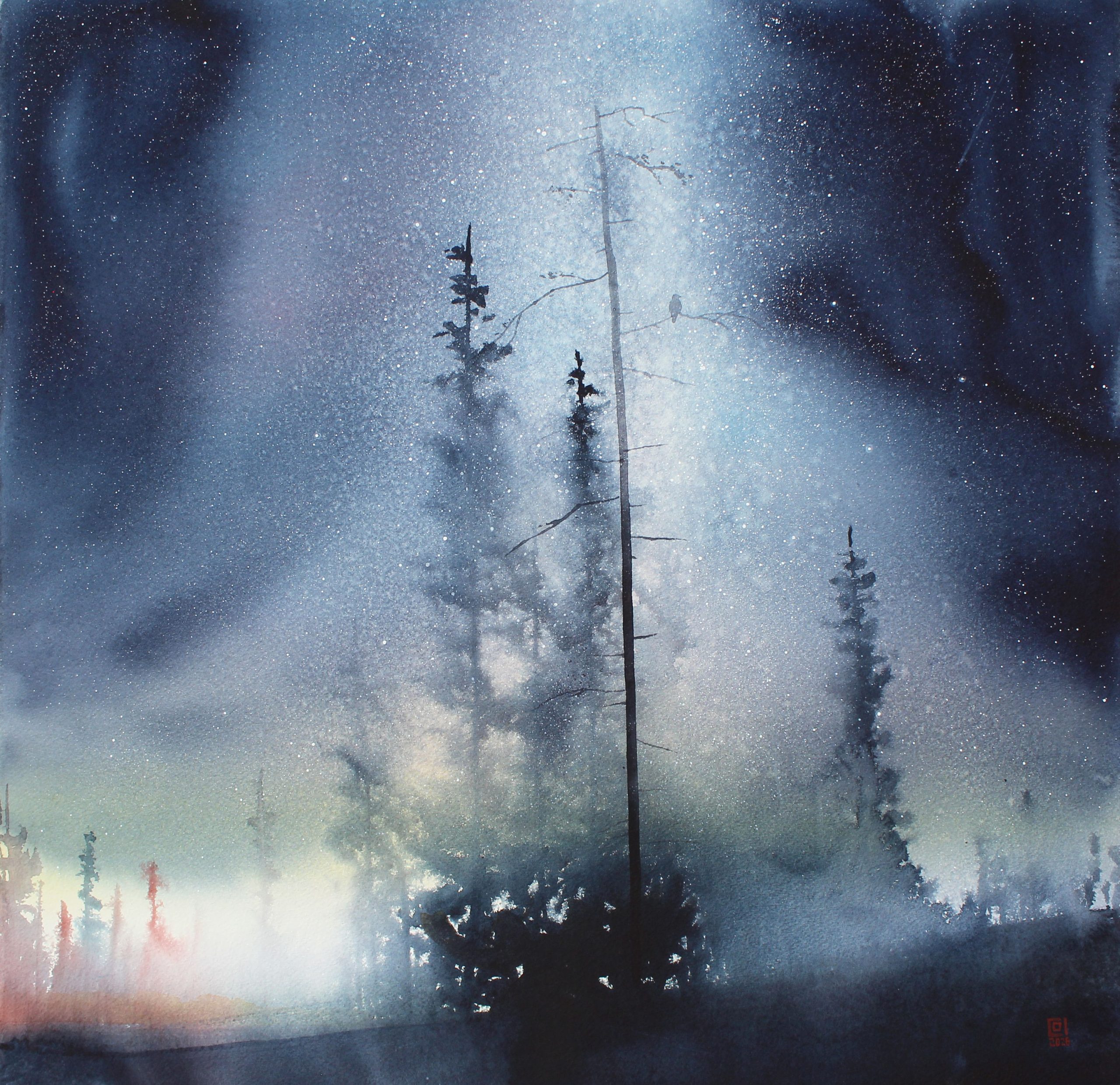
We are pleased  to present the work of Christian Koivumaa, a Swedish watercolorist who loves depicting the landscapes and locations of his homeland.

His passion for watercolor stems in part from the medium's inherent unpredictability; despite his excellent technical mastery, Koivumaa remains open to new possibilities, constantly seeking something different that might surprise him and enrich his experience.

He employs transparent layers  and the "wet-on-wet" technique, enabling him to create richly detailed works characterized by a distinctive use of light.

For a Swede who spends many months in darkness, recreating light has a beneficial—almost therapeutic—effect. We are thus invited to admire everything from the soft light of landscapes and the shimmering glow of the Aurora Borealis to the bold contrasts of city lights.
I am pleased to present my new website, created in collaboration with Thetis.

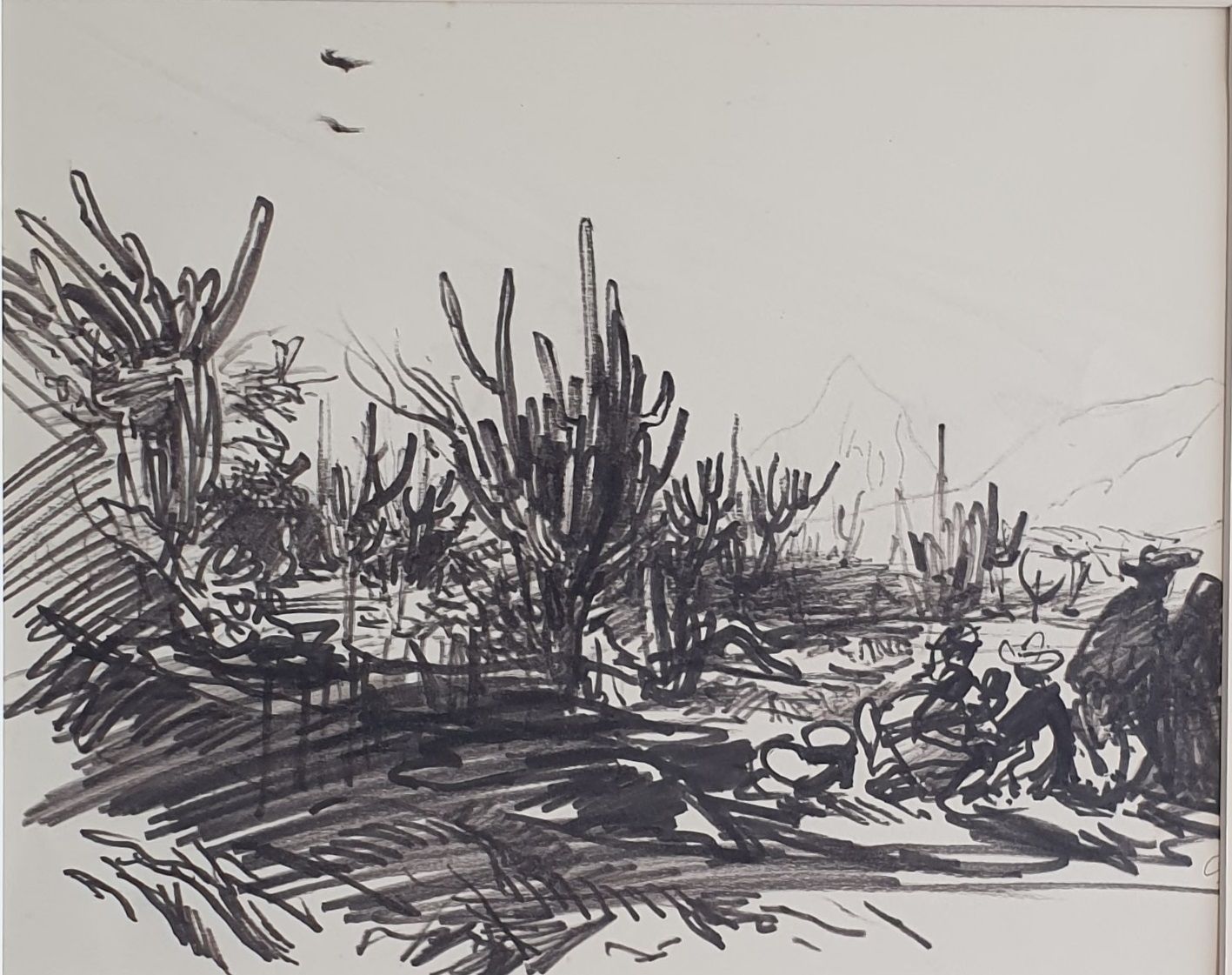
I have decided to take this opportunity to present a series of small drawings and sketches by Pietro Annigoni, one of the greatest masters of 20th-century Italian painting—or perhaps of all time, as Bernard Berenson called him.

Going against the grain of postwar modernist trends, he successfully reclaimed the painting techniques of the Renaissance masters, becoming a key figure in Italian figurative art, both then and now.

A lover of drawing, he left us a rich body of work in pencil, chalk, and ink; sometimes just sketches and studies for paintings, other times true masterpieces.

This small selection reveals the mastery and expressive ability of someone who, with just a few strokes, could convey the world around him.